
Author

Lone Halvorsen

Browsing

Once again, the world’s largest and most prestigious furniture fair, Salone del Mobile, has transformed Milan into the epicentre of the furniture and interior design industry. At the beginning of April 2025, the 63rd edition presented an impressive range of design innovations and cultural highlights.

Tram Salone del Mobile 2025 / Communication Project / Salone del Mobile 2025 © Dentsu Creative Italia

Every year, the fashion capital is transformed into a vibrant design mecca with exhibitions and events when the Salone del Mobile takes place. Illustrious guests and industry professionals from all over the world make the pilgrimage to the city to feel the latest trends and have an exciting time. Thought for Humans, the theme of this year’s edition, was presented by the campaign developed by Dentsu Creative Italy. It emphasises the natural harmony between the human body and materials, which stand for contemporary design, craftsmanship and sustainability. “Our city is proud to share with the Salone del Mobile the ability to grasp the challenges of the present and to commit to investigating, realising and developing solutions that can have a positive impact on the future of the sector and the life of the community. That is why I see the theme chosen for the 63rd edition of the Salone del Mobile – enlightened humanism – as a strong creative stimulus for all those working in the field of design, and as an interesting opportunity to reflect on current events for the many enthusiasts, tourists and buyers who will be attending the exhibitions and events,” announced Giuseppe Sala, Mayor of 
Milan, ahead of this year’s exhibition.

Design Kiosk Piazza della Scala / Project curated by DWA-Design Studio / Editorial selection by Corraini Edizioni © Salone del Mobile

Robert Wilson. Mother / Museo della Pietà Rondanini / Castello Sforzesco / Salone del Mobile 2025 © Luciano Romano

Culture is the future
This year’s Salone del Mobile was opened by the renowned artist Robert Wilson, who presented his impressive installation “Mother” at the Castello Sforzesco. Inspired by Michelangelo’s unfinished masterpiece, the Pietà Rondanini, Wilson created an immersive experience that artfully combined light, sound and space. The installation was accompanied by Arvo Pärt’s “Stabat Mater” and invited visitors to engage in deep reflection on art and spirituality. Villa Hèritage by Pierre-Yves Rochon was another cultural highlight. The French architect designed an installation that emphasises the importance of time and experience in an interior inspired by tradition but reinterpreted with a contemporary sensibility. Visitors to the Salone were also welcomed by “La dolce attesa”, the visionary eye of Oscar-winning director Paolo Sorrentino. With scenographer Margherita Palli and a soundtrack by Max Casacci, it paid tribute to a universal feeling: waiting, the most sincere moment in life, marked by the beating of a mysterious heart. These three artistic projects set impressive accents – they alone would have been worth the trip. These three installations certainly enhanced the appeal of the high-calibre cultural programme of the Milan Design Week, and for the Salone, promoting culture is also an investment in the future.

The importance of light
A special highlight of the Salone del Mobile was the Euroluce Biennale, which showcased the future of lighting design with more than 300 brands from 25 countries over more than 32,000 square metres. Under the title ‘Light for Life. Light for Spaces’, not only technological innovations were presented, but also atmospheric and emotional lighting concepts. Complementing this impressive exhibition were interdisciplinary masterclasses, round tables and workshops. The Euroluce International Lighting Forum took place for the first time as part of the Euroluce Biennale. It provided a platform for discussions on key topics in lighting design, including the importance of the culture of light. “Light gives shape to space. Without light, there is no space. As Albert Einstein said, light is the measure of all things. For me, it is always the starting point. When I am setting up an exhibition, I start with light. 
Because light is not just a technical element, it is a living presence, an actual protagonist,” says Robert Wilson, a true lighting magician.

Paolo Sorrentino. La dolce attesa
Paolo Sorrentino Portrait © Michael Avedon

Design in harmony with nature
The exhibition not only showcased pioneering innovations, but also gave visitors a first-hand experience of the innovative visions of young designers at the SaloneSatellite. For years, this unique platform has provided exciting insights into the future of design. More than 700 designers under the age of 35 and 20 international design schools presented their visionary concepts on the topic of “New Craftsmanship: A New World”. Their aim was to build a bridge between tradition and contemporary vision – not as a contrast, but as a search for a harmonious balance that promotes design in harmony with nature. “A globally unique creative reservoir that gives us the opportunity every year to discuss the future in a dialogue between generations. This is a huge opportunity: The Salone is industrial production, creative capital and working capital, it is Milan, it is a bridge that leads us into the world,” says Maria Porro, President of the Salone del Mobile.

Pierre-Yves Rochon. Villa Héritage Drawing Room (Red)
Salone del Mobile 2025 © PYR

Pierre-Yves Rochon. Villa Héritage Drawing Room (Red)
Salone del Mobile 2025 © PYR

With elegant lines and racy elegance, the renowned Italian design studio “Pininfarina” has been enriching the automotive world with extravagant designs for almost 95 years.

The story of Pininfarina began in 1930 when its founder, Battista “Pinin” Farina, dedicated himself to the design and details of limited-edition luxury sports cars. The Turin-based car body builder became famous primarily for its work for Ferrari, but in total, Pininfarina designed over 1,200 vehicles – from sports cars to compact cars. ADAM spoke with chief designer Dave Amantea about the challenges of design, and groundbreaking developments, in the age of electric mobility.

ADAM: You’ve received numerous awards in recent years. I assume it’s going well for you?
Dave Amantea: The awards are a great honour and at the same time bring with them the responsibility to live up to the Pininfarina name.

What is the significance of electri-
fication for Automobili Pininfarina?
The electric age has just begun, and the best is yet to come. Electrification allows us to set new design standards and pioneer new innovations. The “Battista” is the first Italian electric hypercar to be homologated, featuring cutting-edge technologies and a captivating silhouette that at the same time honours Pininfarina’s heritage. This car is already an icon, and expectations are accordingly high.

Can one already speak of an icon after just a few years?
A car becomes iconic not only through its design, but also through its per-
formance, innovation, and exclusivity. With almost 2,000 hp and world-leading technology, the Battista is unique – and limited to just 150 units.

What would the founding father Battista “Pinin” Farina say if he could see his namesake car?
I hope he’d say “WOW,” and I think he’d look down on us and our design with pride. He was a visionary, and his 1959 prediction that cars would free themselves from the internal combustion engine has now become reality.

What significance does the Battista have for the company?
As the most powerful Italian car ever produced, it is the first model to bear the Automobili Pininfarina name. The Battista symbolises our motto: “Dream Cars. Made Real”.

What advantages does the design of an electric car offer compared to a combustion engine?
The architecture of an electric car offers greater freedom to create a perfect silhouette and a low centre of gravity. Our goal is to combine beauty and technical excellence.

In 2023, Automobili Pininfarina unveiled three cars!
It was a spectacular year with the unveiling of the Battista Edizione Nino Farina, the B95 Barchetta, and the design concept of “PURA Vision.” The Battista connects us to the present, while PURA Vision defines the future.

What is behind the concept of “PURA Vision”?
It is the essence of timeless design, inspired by iconic Pininfarina vehicles of the past. Our goal was to create a clean, elegant design language that will shape future models.

What was the response to the B95 at Monterey Car Week?
Fantastic! It was exciting to see how enthusiastically the audience and press reacted. The bold presentation was exactly the right step.

Where did the inspiration for the B95 come from?
We combined the spirit of an open-top Le Mans racer from the 1960s with the futuristic design of modern F1 cars. The model was also inspired by Pininfarina classics such as the Maserati Birdcage 75th, Ferrari Testarossa Lamelles, Pininfarina Abarth Prototype, Pura Vision, and Battista.

What challenges need to be overcome to maintain the lead over the competition?
We need to take risks and drive innovation. Developing an electric hypercar with nearly 2,000 hp is an enormous challenge, but essential for our future.

Will Automobili Pininfarina target other vehicle categories in the future?
Yes, but step by step. Nevertheless, we want to preserve our “Pininfarina soul” and focus on exclusive small series.

You were named by Bloomberg as one of only 50 people on Bloomberg Businessweek’s 2023 “Ones to Watch” list. Your thoughts on that?
It is a great honour and a testament to the hard work of my team.

How are future design trends recognised?
With vision, intuition, and a dash of luck. You have to look at the world from different perspectives and understand how people want to live in the future.

Which car impressed you the most in your childhood?
A Ferrari Testarossa, which as a child was the object of my wonder. It was love at first sight!

Is Pininfarina the reason you became a car designer?
Yes, definitely! I was born in Turin, embraced the principles of the Pininfarina school, and now work as chief designer for Automobili Pininfarina – it feels like destiny.

And if you hadn’t become a car designer?
I would design futuristic vehicles for Hollywood – no technical limitations, just pure creativity.

Photos Copyrights: © Automobili Pininfarina

FRITZHANSEN,Series7 ©FritzHansen

Following a forced break the Interior Design exhibition «neue räume» (new rooms) recently took place again for the 11th time. Approximately 100 exhibitors met in the old ABB-Hall in Zurich Oerlikon, to present living trends, product innovations and design objects.

The established Design exhibition is considered as an important presentation area and significant meeting place for the «Who is Who» of the furniture scene as well as for design fans beyond the borders of Switzerland. As an additional highlight to the innovative manufacturers from home and abroad with their new products, «neue räume» traditionally shows current and future living trends in various special events. The design world returns to the stage in Zurich with an exciting program of events, interesting product innovations and culinary discoveries. 

VIFIAN MÖBELWERKSTÄTTE AG, Das modulare Aufbewahrungssystem TriobyMiaKepenek,BlackEdition ©MiaKepenek

Colorful and radical

One of this year’s special events was the exhibition «Frauen im Design» (Women in design). It presented well known furniture and objects from designers, who have been making a name for themselves with their designs since the beginning of the twentieth century right through to the present day. Additionally the association «mobiglias – Handwerkskunst aus Graubünden» (Craftsmanship from the Grisons) looked for furniture and objects in a design competition which have a connection to the Grisons and were also handcrafted and preferably are made of local materials. The members of «mobiglias» manufactured the winning works as prototypes and presented them for the first time at the special event. As hoped – and expected – internationally renowned furniture manufacturers were again represented this year. In line with the motto «Wohnen ist da, wo wir uns wohl fühlen» (Living is where we feel at home), the (possibly not yet worldwide) well known Swiss furniture workshops  «Vifian» from Schwarzenburg thrilled us with the stylish entrance hall furniture «trio», which captivates with its delicate look as well as its versatility. Modular, courageous and multidimensional! The brands «Gufram» and «Memphis Milano», which are now also part of «Italian Radical Design», certainly made a trendy appearance. The newly named group was founded with the goal of reinforcing Italian design brands that stand out thanks to an unmistakable and non-conformist approach. In Switzerland both labels are exhibiting together for the first time at «neue räume 22» and amongst the predominantly discreetly colored furniture pieces at the exhibition the colorful furniture world of the Italians was unmissable. Fritz Hansen was fortunately also present, this time with a selection of cuddly lounge chairs and of course Tom Dixon could not be overlooked, celebrating his 20 years in business this year as well as Magis, Minotti, wb form, Skagerak, ClassiCon or embru, to name but a few.
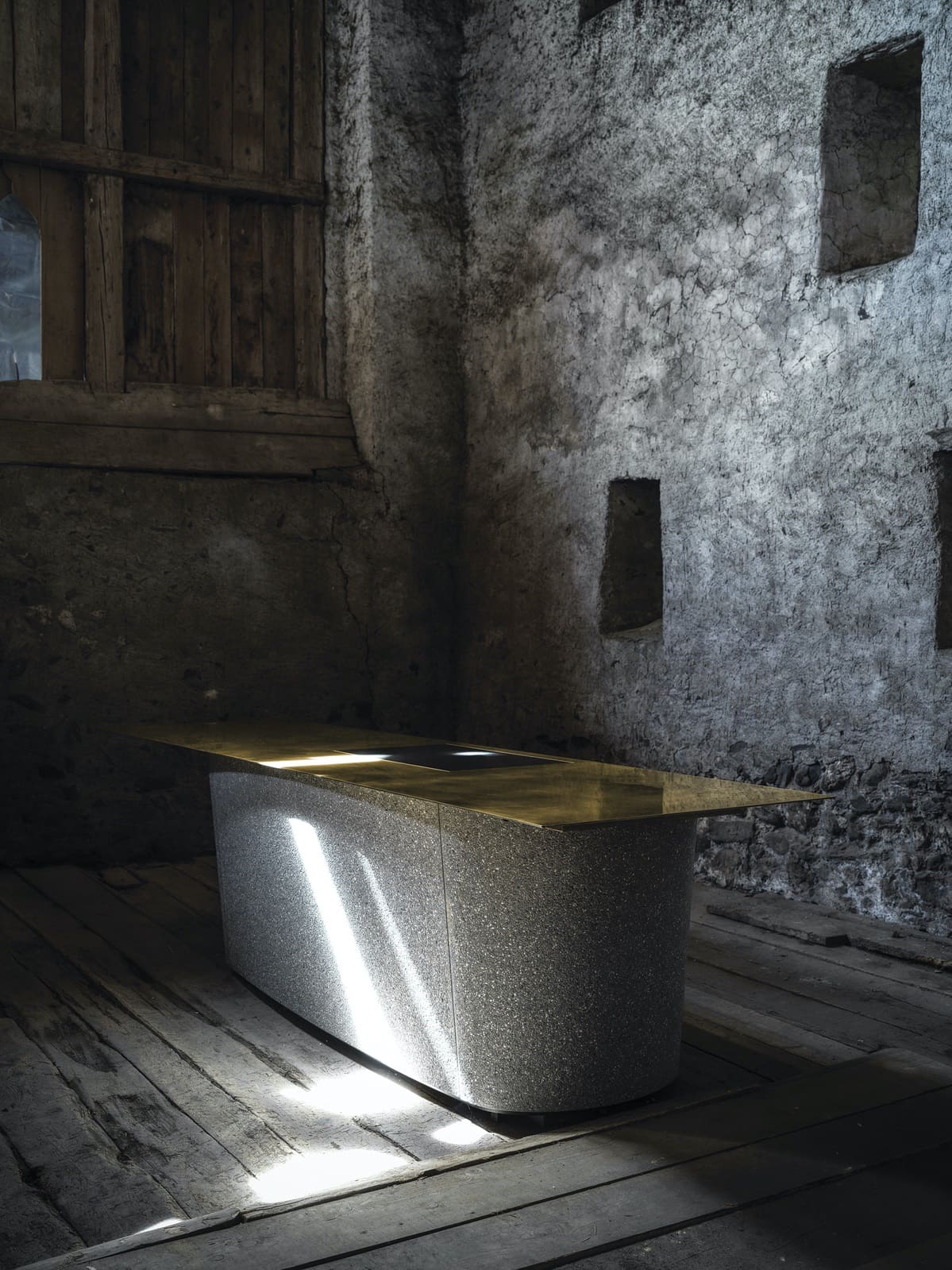
OREA, Caminada © A. Herger

©ConstantinMeyer

Très chic in the laundry room

In addition to furniture and objects there was also something exciting to see from the Swiss textile and laundry world. For example the company Christian Fischbacher which has been producing sensual and aesthetically outstanding home textiles for over 200 years. In conjunction with the architect and designer Hadi Teherani the joint «Contemporary Persia Collection» has now been extended by two hand-tufted carpet models. The pattern and colors were inspired by designs from Iran and combine the finest merino wool with shimmering silk and bamboo. The company Schulthess proved to us that doing the laundry can also be chic with an elegant washing tower that does not have to hide in the dark linen room. And the special program item «Orea meets Caminada» verified that cooking is also linked to design. The three-star Michelin chef, Andreas Caminada, created the cooking island «Orea AC» in cooperation with David Spielhofer. Ores plans kitchens as a project very close to their hearts, the kitchen should inspire and motivate you to cook yourself. Presented by Anna Maier, Andreas Caminada introduced the classic design with its fascinating materialization. 

CHRISTIAN FISCHBACHER, Contemporary Persia Moodboard © Jonas von der Hude

GUFRAM, Sofa Bocca Another green cactus © Gufram

GUFRAM, Magritta series © Gufram

CHRISTIAN FISCHBACHER, Contemporary Persia Collection, Teppich Afsun © Christian Fischbacher
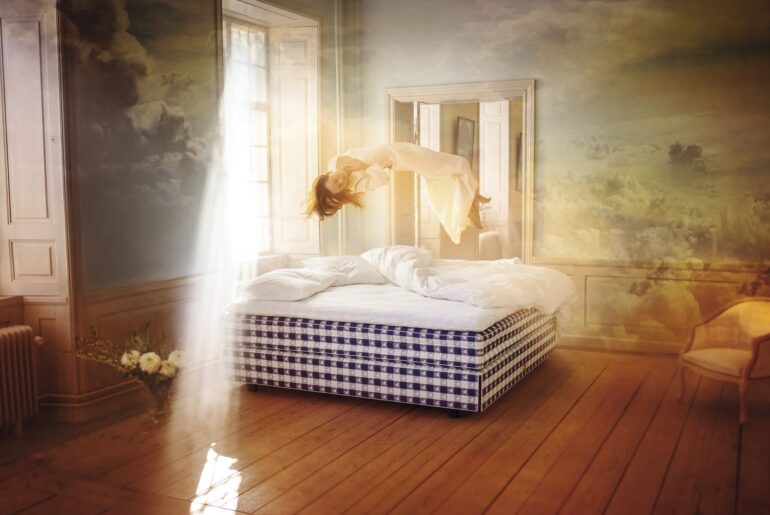
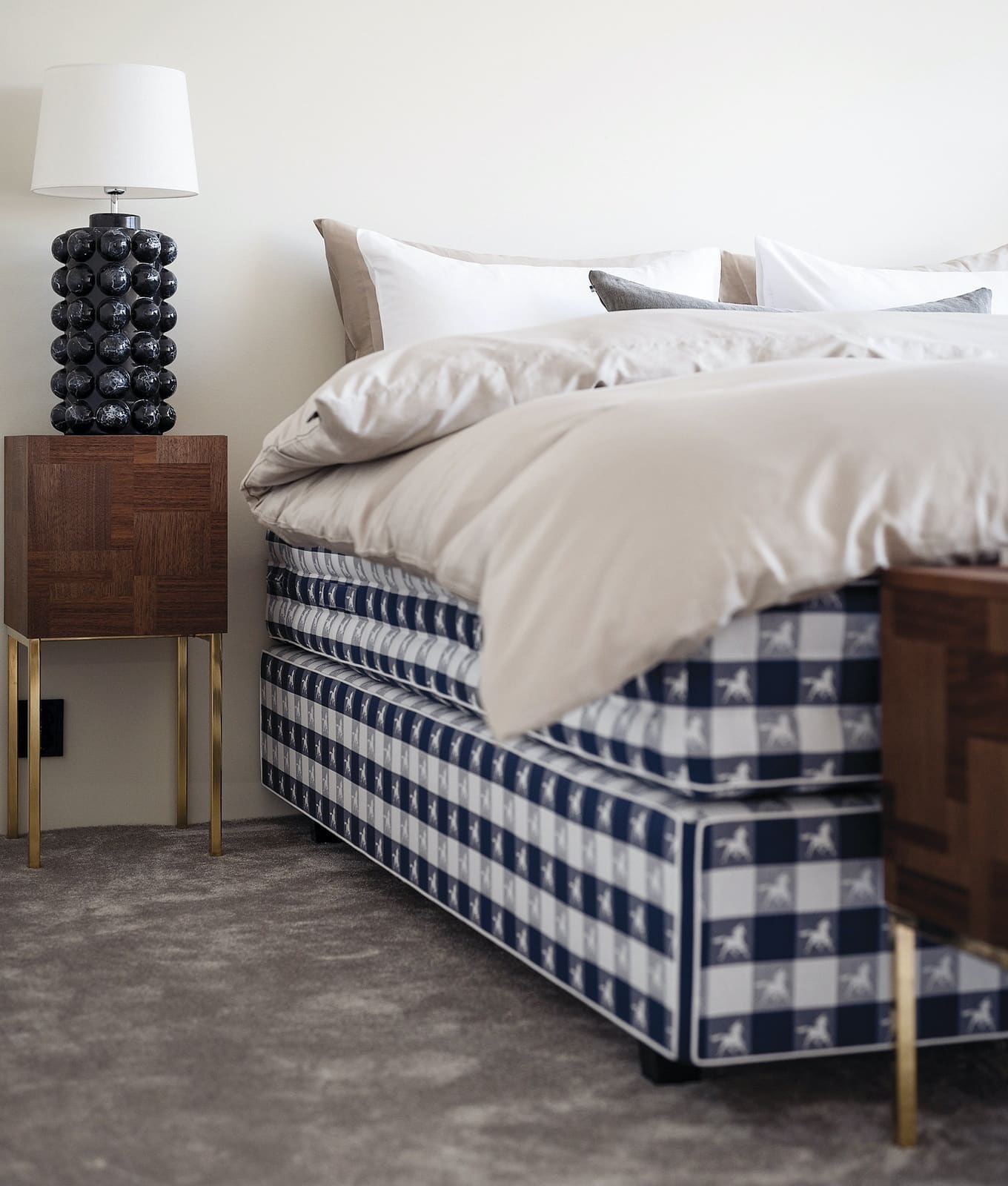
Swedish Excellence and the ambition to build the best beds in the world is innate to the people at “Hästens”. The fabulous beds are characterised by natural materials, old-fashioned craftsmanship and the company’s distinctive DNA, the “blue check” pattern.

The world is changing but the dedication to craftsmanship remains. This has been the philosophy at Hästens since its foundation in 1852 and the company has been perfecting its craft for generations in its in-house atelier in Köping, Sweden. The beds are nothing without the established craft and the craft is only as good as those who practice it. Sleep is the most natural thing in the world and this is also the reason why the beds are only manufactured from the same natural materials as in the beginning when the first beds were made: cotton, linen, horsehair and pure wool. Natural materials have a number of advantages for healthy sleep – including the property of supporting and relieving your body so the blood can circulate freely. They simultaneously allow air to circulante around your body, lower the temperature and as such help you to fall asleep quicker and to remain in a state of deep sleep longer.

A work of art in the bedroom
A masterpiece is not the end but a new beginning because at the exact moment when a bed is completed, work begins on the next bed. At Hästens it never stops and this is the reason why the company is also open to new approaches and creative minds of our time driven by inspiration. What would we create if an architect designed a bed or we would take our inspiration from the world of Haute Couture? Or perhaps a designer who is inspired by different cultures from throughout the world? Legendary designs are not achieved by sitting around idly, but by working together on a highly creative level.

Bed manufacture broke new ground when the Canadian designer Ferris Rafauli Wege presented a bed which ranked as one of the most exclusive beds in the world – the Grand Vividus. Rafauli, who is known globally for his innovative projects for luxury apartments, wanted to improve the design of the most comfortable bed in the world, by making it an architectonic statement that would transform any bedroom into a splendid and opulent chamber. With its finest leather, polished wood, nubuck and brass decoration and its elegant architectural lines, the Grand Vividus is showcased as a work of art and majestic focus of every bedroom.

In a world full of dreamers
«It is the master of ultimate luxury. There is no-one who presents the traditions we have at Hästens better than Rafauli», claims Jan Ryde, CEO and fifth generation owner of Hästens. On the occasion of the 170 anniversary of the company this year, the collaboration with Rafauli was continued and a new chapter began in the Hästens history, which is dedicated to the «drēmǝr». Drēmǝr are inspiring people who do more than just dream and lead a conventional life. They are conscious of their inner greatness and make their dreams, both small and large, come true. This is the impetus for the drēmǝr being launched on the market on the day of the anniversary and is simultaneously intended to embody six generations of dreams, achievements, excellence, mission and mastery for the traditional company. Of course this bed was also manufactured with meticulous craftsmanship and completed with unique textiles designed by Ferris Rafauli – the same material used for the Grand Vividus. Rafauli’s basic principle is simple and goes like this, «creations should be timeless but still correspond to our time. My designs play with and arouse the senses in their opulence and extravagance, but remain classical and formal».

Photos Copyrights: Hästens

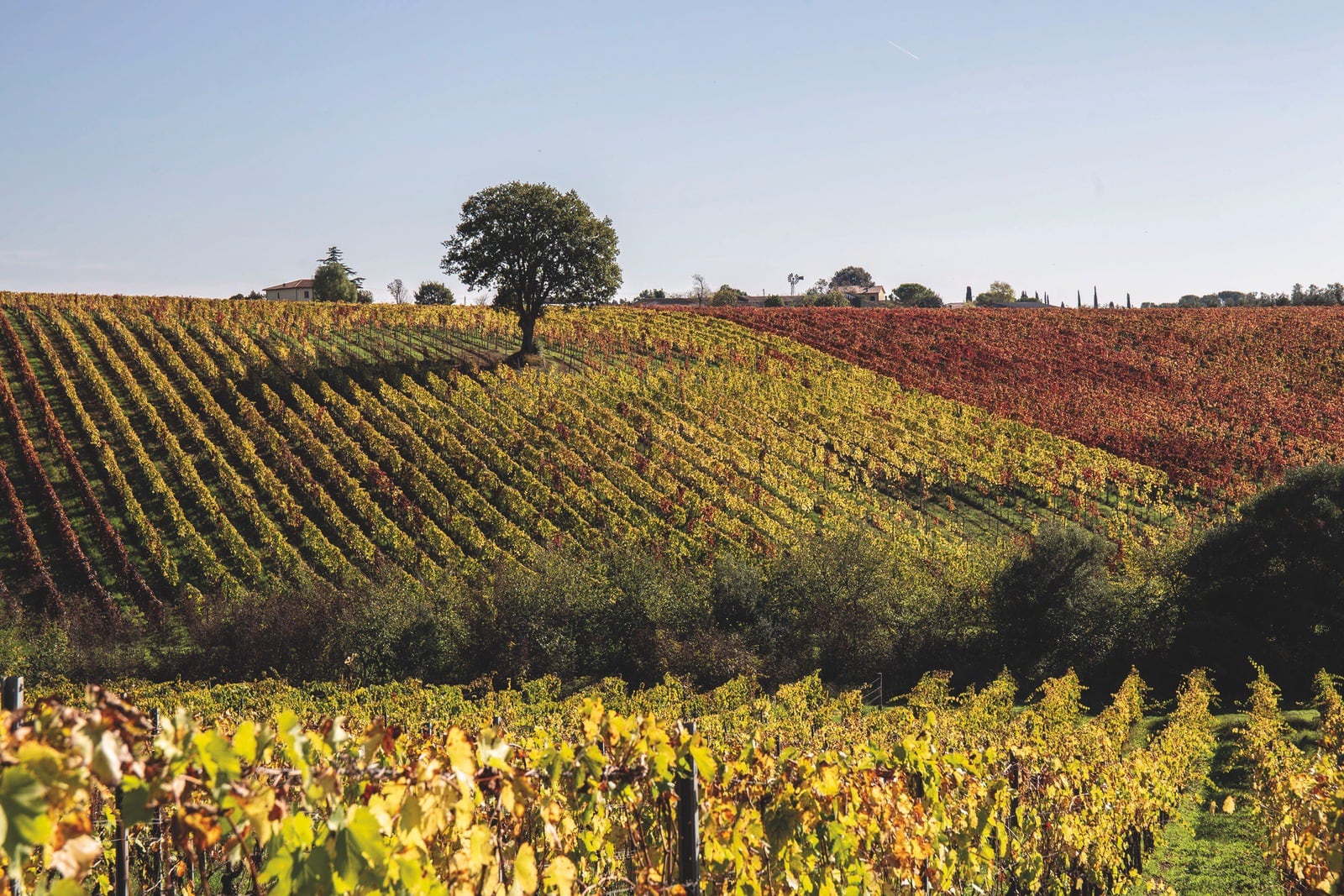
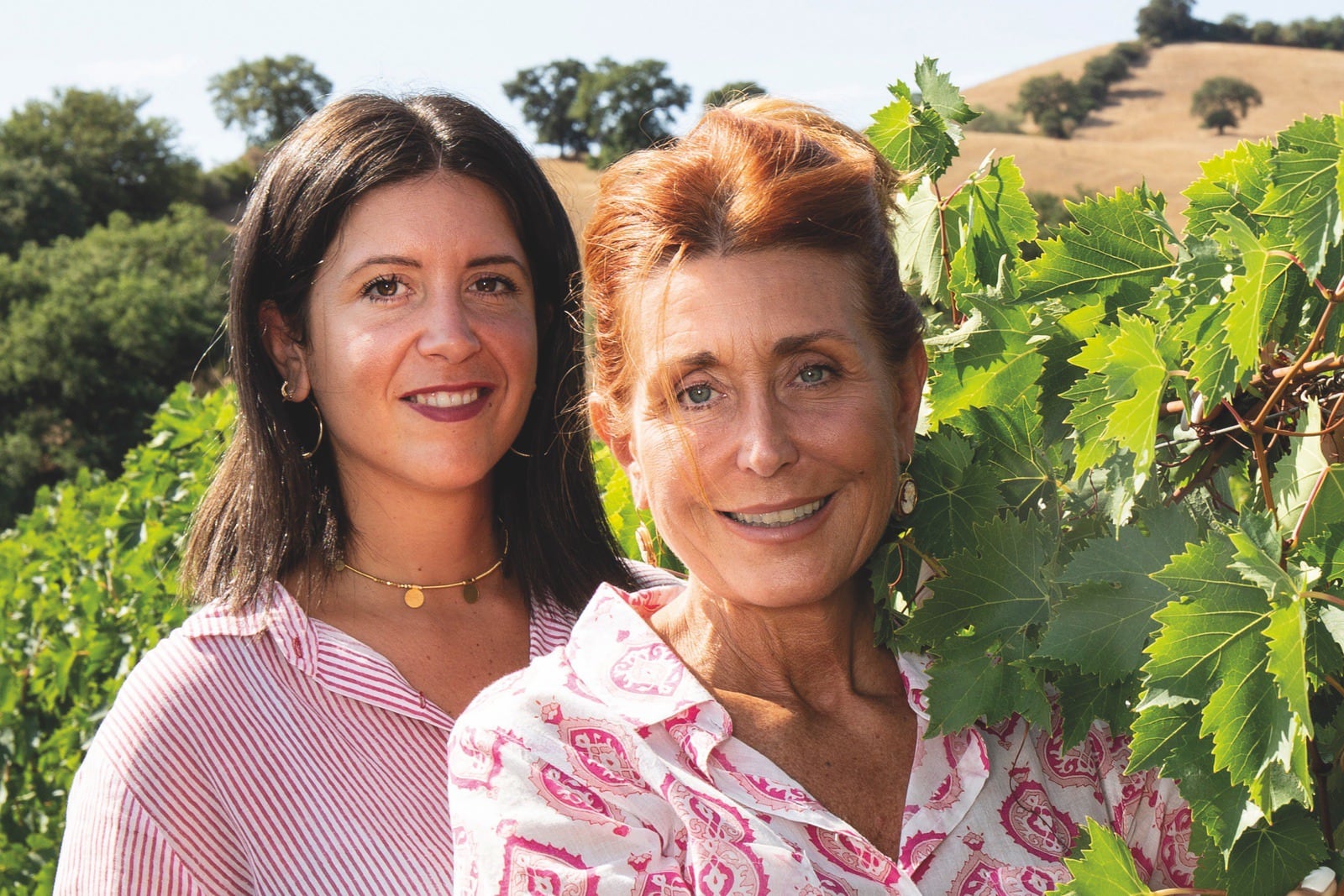
The Fattoria Le Pupille Winery is nestled between meadows and vineyards, situated in the heart of Maremma. Over thirty years ago Elisabetta Geppetti took over the winery from her father-in-law, Fredi, and within the shortest space of time SHE HAS ESTABLISHED THE ELITE OF THE ITALIAN WINES. 

Is the wine business in your blood or when did it become clear that you wanted to enter into the winemaking world?
At the beginning wine was simply a passion, because at that time I studied Art History in the Faculty of Humanities at Pisa University. When Fredi died it became clear that winemaking was my vocation. I sensed immediately that I had to follow this passion, which was not just mine but his as well. 

What does tradition mean to you?
For me tradition is the essence of a place or a community of people in constant development to a higher level of consciousness. It is roughly the same concept that I always try to convey to my children: to stay faithful to themselves and to adapt to a consistently changing world.

Tradition or innovation?
Definitely both. In my opinion you always have to respect your own history, whether it is your personal history or that of a territory and in the process to strive for continuous improvement – in harmony with the time in which we live.

What is it that fascinates you about your profession?
Even after many years of experience I am still as impatient and curious as on the first day. What will Mother Nature offer us in this new year, how will the vintage be, how much rain will we get and which winds will blow our way. Winemaking does not just mean working the land and the vineyards, but also looking up at the sky and sometimes saying a prayer.

Which grape varieties do you grow most frequently and which are your location wine specialities?
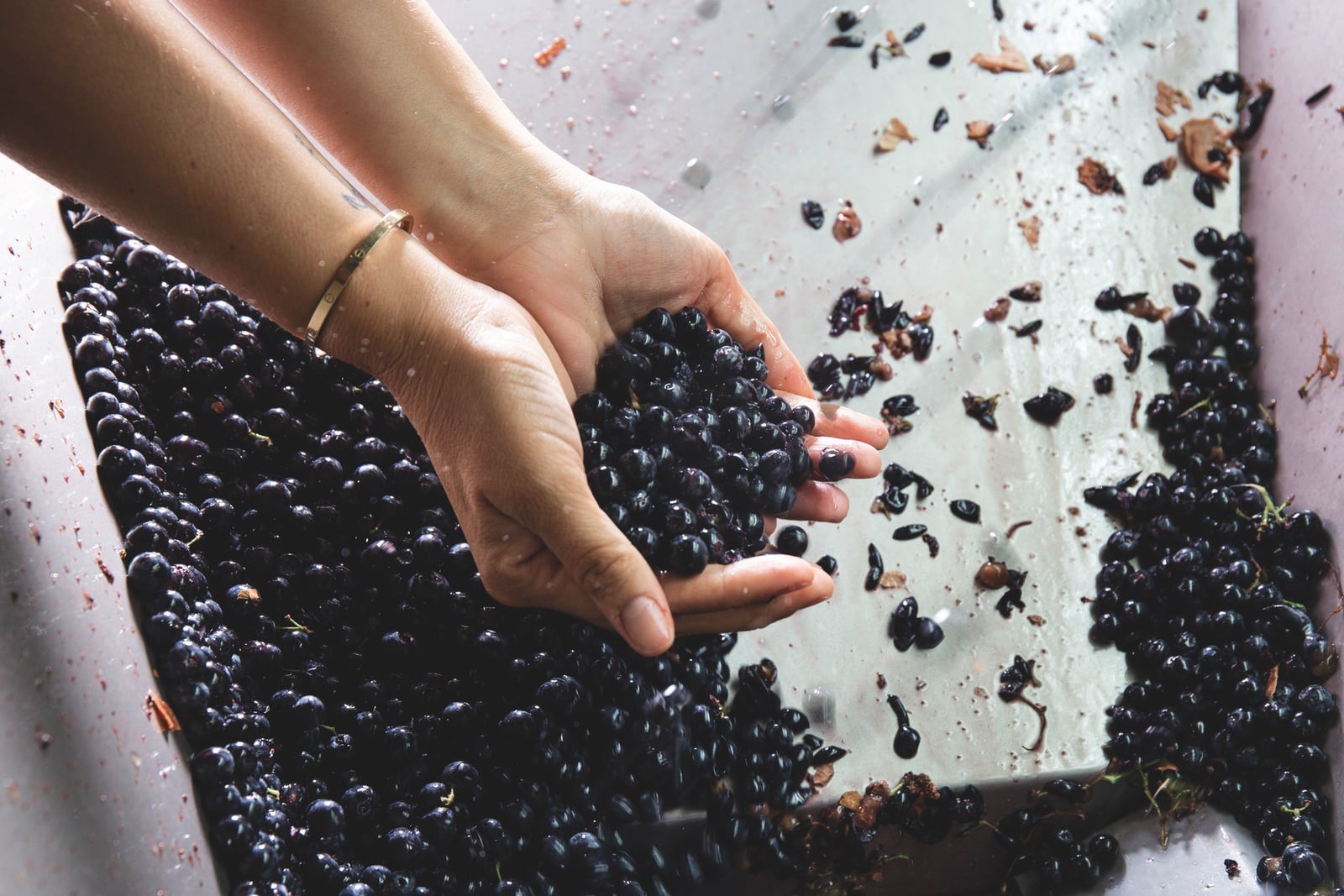
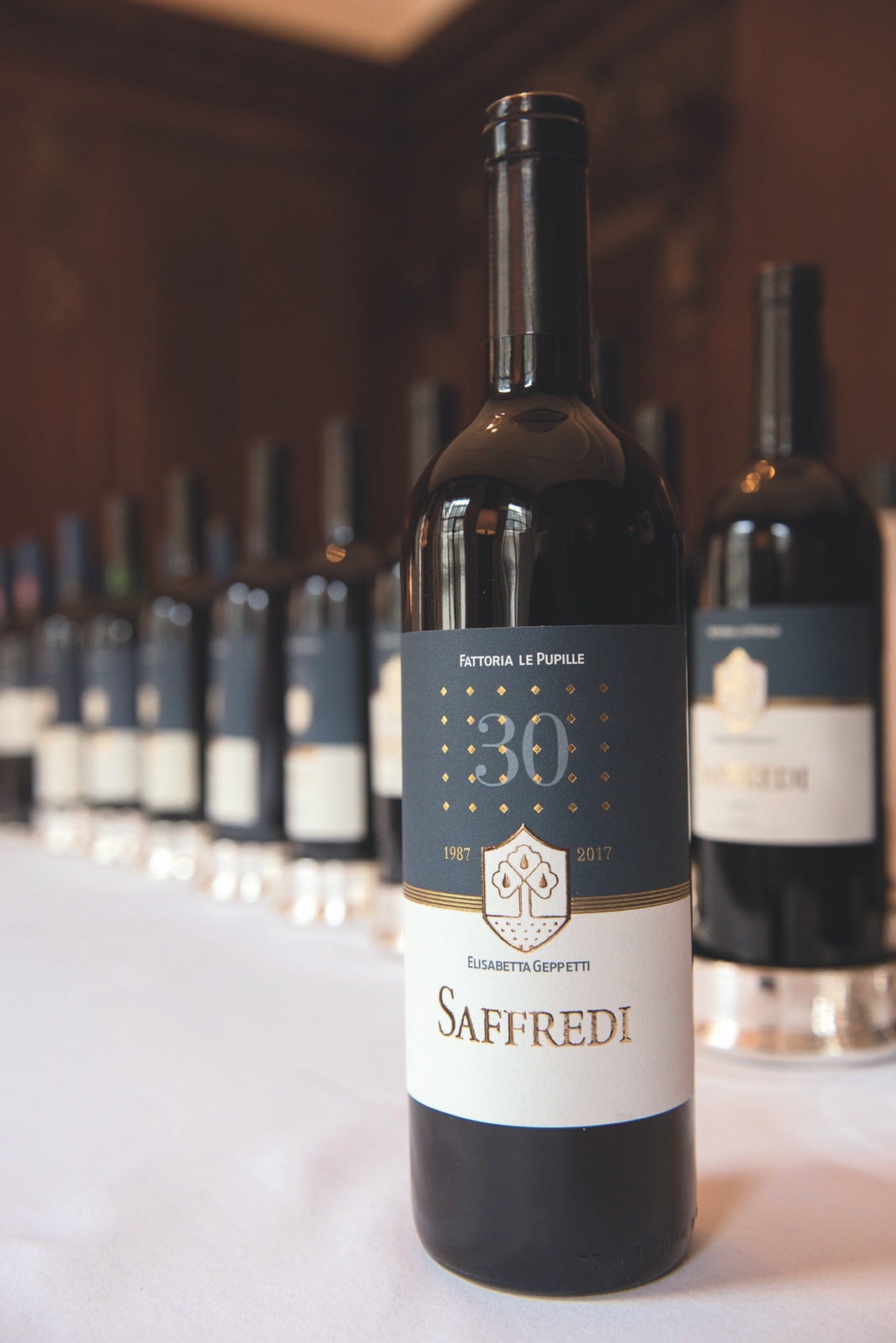
Our vineyards are situated in the heart of the appellation Morellino di Scansano, therefore the Morellino di Scansano is our most representative wine. However, we became internationally known due to the classic Saffredi, a Bordeaux blend, and the Sangiovese-Cru Poggio Valente – two Crus from the heart of Maremma from an elevation of between 250 and 300 meters.

The Fattoria Le Pupille Winery is situated in the beautiful Tuscan Maremma. What influence do the environment, the climate and nature have on your wine?
The microclimate plays a very significant role and we are extremely lucky because almost all our vineyards are situated on hilly terrain, not far from the sea and in a very sunny location. I always had the impression that the sun in Maremma shines a little bit brighter than anywhere else.  

What makes your wines so special? Is there a secret that can share with us?
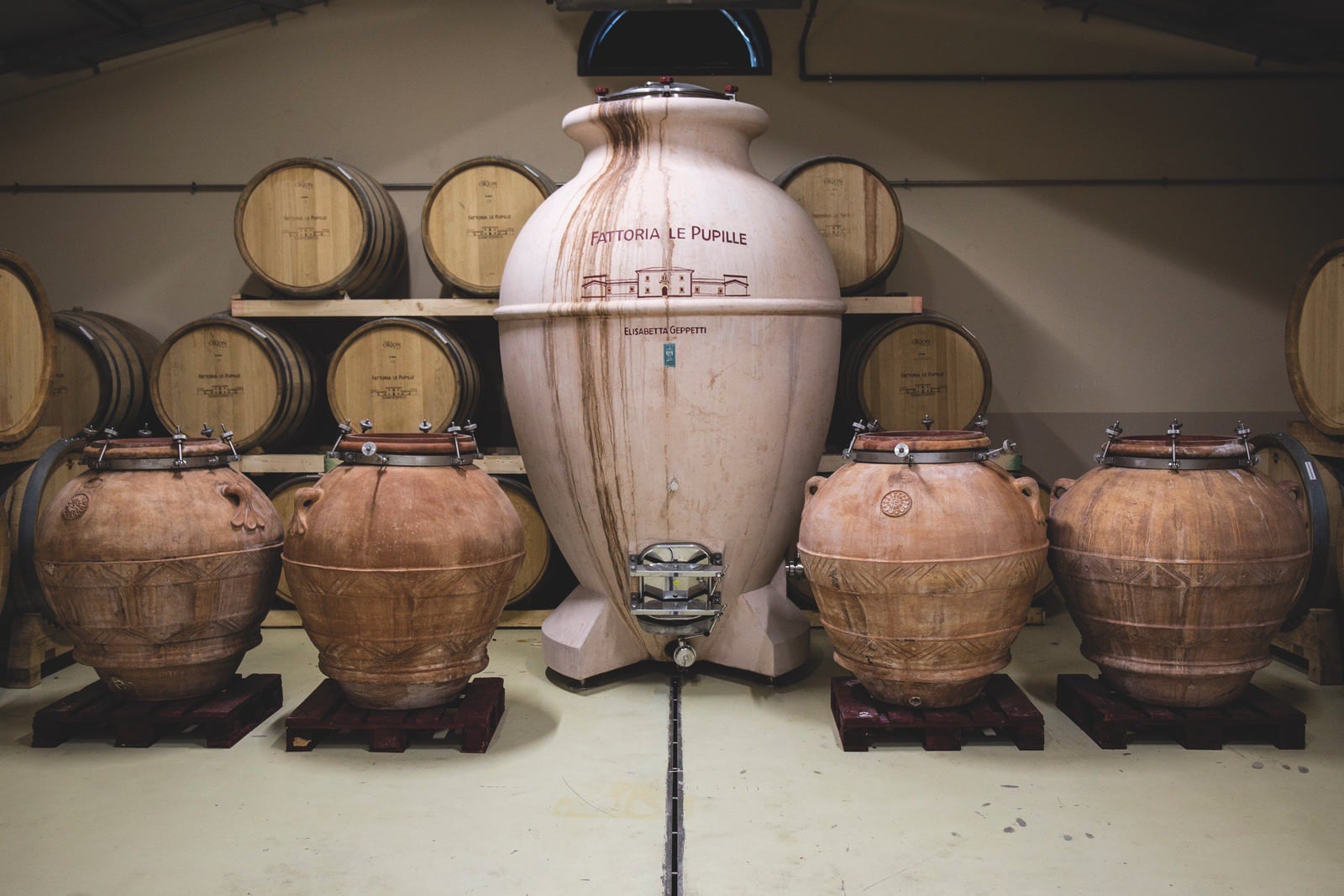
Thank you for the praise; that makes me very happy. However, I do not think that we weave any secrets into the production of our wines. Ultimately the wines are the reflection of that which we are as a company and as a family – and one of our most important values is the attention to detail.

How important is organic cultivation?
Organic cultivation is an issue that is very close to our hearts. At the moment we are conducting tests on several plots and hope that we can convert all our vineyards to organic cultivation in the future, even if we have been operating agriculturally for years with a low environmental impact and have joined other projects that are promoted by the Ministry for environmental transition. 

Which of your wines are you particularly proud of?
Wines are like children, I love them all!

Which questions should one definitely ask of a winemaker?
Which wine would you drink on judgment day?
The answer may reveal that it is not necessarily one of our wines. Wine producers are like artists: to create their works they require constant inspiration. 

Photos Copyrights: Fattoria Le Pupille